Oolong Processing
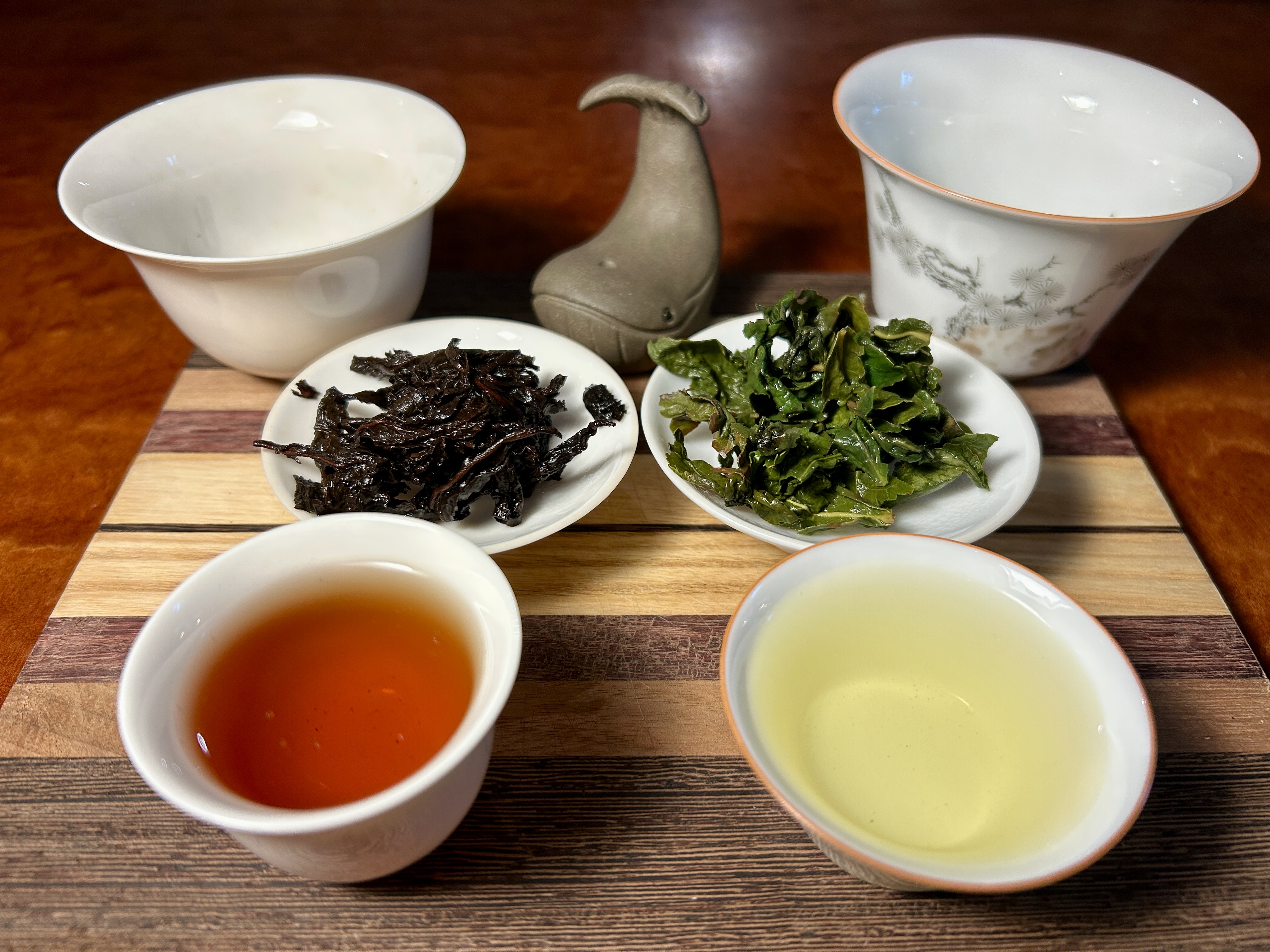
Oolong tea, 乌龙茶 (wū lóng chá), is my personal favorite type of tea. The major factor that distinguishes oolong tea from the rest of the tea types is the degree of oxidation allowed to take place in the leaves. With a range of about 10% to 80% oxidation, the flavor profile can be drastically different between two different types of oolong tea. Both teas above are oolongs but completely different types! I’ll talk more about the production steps below!
1. Picking
Most teas are picked from the new growth of the camellia sinensis plant. For making oolong teas, it is most common that the first 3-4 leaves are plucked. There are a few reasons for only plucking the new growth of the tea plant. The first reason is the tenderness of the leaf, when undergoing other processing steps such as bruising to induce oxidation it’s important to make sure the leaf stays more intact. The lower leaves on the plant are stiffer and therefore more susceptible to damage during processing. The other reasons are that the newer leaves have the highest concentration of flavor compounds and only harvesting the new growth promotes the plant to grow new shoots.
2. Withering
Once the leaves are removed from the plant, their stress response will immediately begin producing chemicals that are responsible for the aroma and flavor of the tea. After being picked, the leaves are laid out to wither so the water content evaporates, the leaves begin to get softer, and they undergo more environmental stress from the UV radiation, dehydration, and heat. The two types of withering are solar withering, where leaves are spread out in direct sunlight, and indoor withering, where the leaves are laid out inside covered or shaded areas. Getting the right timing and balance between a combination of solar withering and indoor withering is essential to creating the best flavor profile of the tea.
3. Bruising/Oxidation
Time for even more chemical processes to take place! In order to oxidize the tea, the cell walls need to be broken down so they can be exposed to oxygen. The two methods for the bruising process are shaking and tossing around the leaves on bamboo trays or by rolling them around in a large woven bamboo basket. The term "bruising" comes from how parts of the leaf turn brown during this process, it’s due to a chemical reaction called polyphenol oxidation and is the same thing that turns cut fruit brown when exposed to air. Bruising is done in quick bursts for a few minutes at a time, then the leaves are left to rest for about an hour before being bruised again. The timing for bruising, resting, and how many cycles of each, all depends on what the final goal of the tea oxidation level is. Since oolong teas are defined by partial oxidation, after this process is done the leaves will have a mixture of bruised brown spots along with green spots that remain unbruised. The oxidation levels also effect the color of the brewed tea, more oxidation will make the tea brew darker, and less oxidation will make the tea brew lighter.
4. Fixing/Kill Green 杀青(shā qīng)
After oxidizing to the desired level, fixing is done to stop the tea leaves from oxidizing any further. The most common method of doing this today is by putting the tea leaves in a rotating cooker and heating them briefly to deactivate the polyphenol oxidase enzymes. The temperature and time for this vary based on what was achieved in the previous bruising/oxidation step and what type of tea is being made, usually it is very short.
5. Rolling
This step is exactly what it sounds like. When the leaves come out of the cooker they are still a little bit damp. Using a machine, the leaves are rolled around in circles which helps to continue breaking down the cell walls and to extract more of the flavorful juices of the tea.
6. Baking/Drying
The final step for processing the tea is baking the tea to dry it. Baking the leaves not only dries them out, but also triggers a completely new process. This process is a non-enzymatic browning reaction called the Maillard reaction. What happens here is that when amino acids & sugars are combined with heat, they make Maillard compounds. One of these compounds, pyrazines, is responsible for the nutty and roasty flavors in teas. Another two, furans and furanones, are what create the sweeter tastes and aroma of the tea.
Next year I am planning to visit the Wuyi Mountains 武夷山 in Wuyishan of the Fujian province in China which are home to Da Hong Pao 大红袍, one of the most famous varieties of Chinese oolongs, and rock oolongs grown in the mineral rich rocky soil of the mountains. Another very famous Chinese oolong tea with a completely different flavor profile is Tieguanyin 铁观音 which is grown in the Anxi County of the Fujian province in China. I highly recommended trying different oolongs and discovering the range of flavor and aroma profiles of this amazing category of tea!